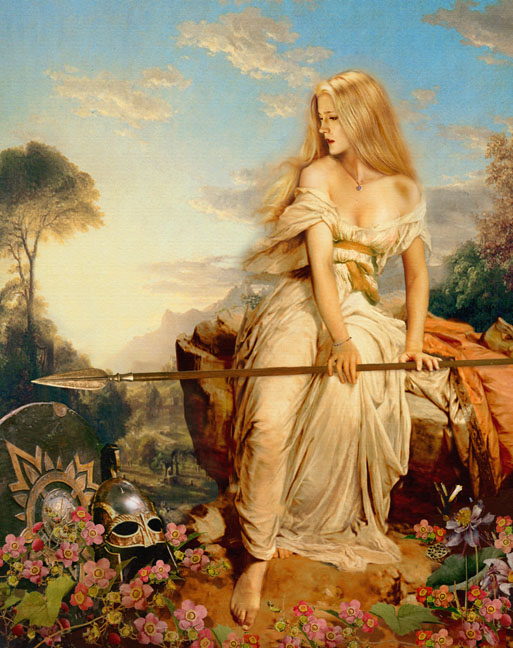
Another Babalon Rising festival is in the books, and my life is beginning to show signs of what those in consensus reality would call normalcy. Babalon Rising, for those that haven't heard, is an annual four day occult festival dreamed up by yours truly and some of my closest cohorts.
This was officially my "year off" for the festival. Meaning, instead of running around all day and half of the night like a manic trying to herd Thelemites (much worse than herding cats, I can assure you) I actually was able to attend portions of the festival and even sleep in.
So what did I do with my precious time? I served as a sounding board for my friends who needed space to vent, I ran the Qabalah Bar (a tradition at Babalon Rising; someone nude is painted as the Tree of Life and shots corresponding with each of the sepheroth are mixed and then imbibed as body shots from the living "tree") and I got ridden hard at a New Orleans voodoo ritual to Manman Brigette. I don't think I've ever been possessed quite so completely before. I have (nearly) no recollection of what occurred during my time as a horse (save the odd image of a little white boy's bare butt covered in fishnets and bouncing to the beat of the drums -- it's funny what the Gods will let through!)
I got to ride around French Lick, Indiana with the legendary and notorious magicians Lon Milo DuQuette and Donald Michael Kraig. That's one for the bucket list. By the grace and wisdom of my spiritual sister Magdelyn M. I got to help begin working the New Aeon work of the Cup and the Paten. I had the stunning realization that, in a small way, I am helping to shape the history of occultism in America, something I love very much and am humbled by.
In this year's Feast of the Beast ritual I invoked Hadit, the master magician. It is a good archetype for me to be working with, as much progress has been made since then on my other blog. Thus far I have held the FoB roles of: Babalon, Nuit, Baphomet (best costume EVER), a Maenad, a Scarlet Woman, and now Hadit. Next year is our seventh year and I plan to serve as Babalon once again.
My profound thanks and agape go out to everyone who participated in this year's festival. The energy was astonishing. After performing the opening Star Ruby ritual I was so overcome I could barely walk, and that was just day one. Thank you sisters and brothers. 93!
Showing posts with label worship. Show all posts
Monday, June 20, 2011
Tuesday, November 23, 2010
Back to the Blogging Board
The other day I was reading my boss's blog, and enjoying it thoroughly, when I realized it hadn't been updated since July of 2009. I thought, "I should really encourage her to get back to writing in her blog" when the irony of the fact I haven't been keeping up with my own blog hit me. When I asked her about her abandoned webspace she defended herself with "Oh, I just don't have anything to write about." Which I promise you is not true. Even if the library wasn't going through a complete overhaul of our cataloging and circulation system (which we are) the day-today workings of a public library leave ample room for all manner of interesting anecdotes. I appreciated her sentiment, though. I, too, have not written recently for what I deemed lack of subject matter. I haven't done anything new/groundbreaking/vaguely interesting to anyone with Athena worship in a while, and, with the season of the Witch upon us, I've been poking around in Cochrane's letters and wishing I had the gumption to actually follow the Spiral Castle Tradition full time.
What is the Spiral Castle Tradition, you ask? Gentle reader, allow me to introduce you to a Tradition of Witchcraft in the 1734/Clan of Tubal Cain mold that Laurelei and I created whole hog from immersing ourselves in the Robert Cochrane letters and Graves' seminal The White Goddess. It is a ecstatic mystery tradition with legitimate roots in British Traditional Witchcraft. It is a three-degree initiatory tradition, although we make no claims of succession to anyone, apostolic, or otherwise. Our calendar is based on the eight festival cycle, along side a lunar calendar related to tree-months and totemic animal cycles. The central Deities of the tradition are the Red God: Tubal Cain, and two Goddesses, the White and the Black. Note 7/18/2011: We're blogging about it here.
Is anyone actually a part of this oh-so-nifty tradition? Well, sort of. I mean, if you count myself and Laurelei. I currently practice the tradition when it suits me, along with the Athenian festival calendar (when it pertains directly to Athena) and Thelemic practices including Liber Resh vel Helios and the Star Ruby (because who doesn't love using Greek in ceremonial magick?). So , yeah, my spiritual practices have been very *ahem* eclectic as of late. This is in addition to my loose studies in Goddess/feminist spirituality such as the Women's Goddess Retreat. I just can't seem to focus on one thing, which is probably why, although I am filled with good intentions to mentor to the local occult community, the student have thus far not appeared.
I have grand plans for all of these irons in the fire. I've started three different books, but none of them are anywhere near completion. The first, Under Her Aegis, is my attempt at a guide to the modern worship of Athena. The next is an untitled book on Thelemic Witchcraft. I can hear you laughing, but really, Gardnerian Wicca owes a huge debt to Crowley, and the promulgation of Thelema in the New Aeon has found its most vital medium in NeoPaganism. The systems compliment each other very well. The third work is a monstrosity I fear I will never finish. It is my attempt to distill my collected knowledge of Witchcraft into a single book. I see it as my Great Work, and, because of that, I wonder if it is even meant to be completed. It is more than a simple Book of Shadows. On my best days I see it as a greatly expanded volume in the spirit of Huson's classic Mastering Witchcraft.
All of this, and I still intend to go back to library school. I have always had lofty aspirations -- a good trait in an occultist.
Life is not all coven-planning and writing the next great treatise on Witchcraft. I fret over seeing my family for Thanksgiving later this week. I worry about our Yuletide gift-giving budget. I go to work happily and hope that the forthcoming new catalog and circulation system will run well and smoothly.
And, hopefully, I continue to blog. :)
What is the Spiral Castle Tradition, you ask? Gentle reader, allow me to introduce you to a Tradition of Witchcraft in the 1734/Clan of Tubal Cain mold that Laurelei and I created whole hog from immersing ourselves in the Robert Cochrane letters and Graves' seminal The White Goddess. It is a ecstatic mystery tradition with legitimate roots in British Traditional Witchcraft. It is a three-degree initiatory tradition, although we make no claims of succession to anyone, apostolic, or otherwise. Our calendar is based on the eight festival cycle, along side a lunar calendar related to tree-months and totemic animal cycles. The central Deities of the tradition are the Red God: Tubal Cain, and two Goddesses, the White and the Black. Note 7/18/2011: We're blogging about it here.
Is anyone actually a part of this oh-so-nifty tradition? Well, sort of. I mean, if you count myself and Laurelei. I currently practice the tradition when it suits me, along with the Athenian festival calendar (when it pertains directly to Athena) and Thelemic practices including Liber Resh vel Helios and the Star Ruby (because who doesn't love using Greek in ceremonial magick?). So , yeah, my spiritual practices have been very *ahem* eclectic as of late. This is in addition to my loose studies in Goddess/feminist spirituality such as the Women's Goddess Retreat. I just can't seem to focus on one thing, which is probably why, although I am filled with good intentions to mentor to the local occult community, the student have thus far not appeared.
I have grand plans for all of these irons in the fire. I've started three different books, but none of them are anywhere near completion. The first, Under Her Aegis, is my attempt at a guide to the modern worship of Athena. The next is an untitled book on Thelemic Witchcraft. I can hear you laughing, but really, Gardnerian Wicca owes a huge debt to Crowley, and the promulgation of Thelema in the New Aeon has found its most vital medium in NeoPaganism. The systems compliment each other very well. The third work is a monstrosity I fear I will never finish. It is my attempt to distill my collected knowledge of Witchcraft into a single book. I see it as my Great Work, and, because of that, I wonder if it is even meant to be completed. It is more than a simple Book of Shadows. On my best days I see it as a greatly expanded volume in the spirit of Huson's classic Mastering Witchcraft.
All of this, and I still intend to go back to library school. I have always had lofty aspirations -- a good trait in an occultist.
Life is not all coven-planning and writing the next great treatise on Witchcraft. I fret over seeing my family for Thanksgiving later this week. I worry about our Yuletide gift-giving budget. I go to work happily and hope that the forthcoming new catalog and circulation system will run well and smoothly.
And, hopefully, I continue to blog. :)
Tuesday, July 6, 2010
My Journey to Athena
How did I, a Witch and a Thelemite, become a Hellenic Polytheist? It has been a winding road.
Three years ago I began to open myself to the wisdom of the Greek pantheon. I had made a pilgrimage (hopefully the first of many) to the Nashville Parthenon, where I was struck with wonder at the awesome power of Athena for the first time.
I've worked with Owl as a primary totem since I was a dabbling teenager, my magical working name has always been Latin for the little owl, but I was not yet ready to accept that Athena had a place of prominence in my life. I had worked with the Goddess Lilith for many years with mixed results, and I resisted the Greek Gods as the stuff of my childhood. I had worshiped them when I was barely ten years old. They were my first forays into Paganism. Their myths were taught in public school. I sniffed at their commonness in my life. I was too blinded my the allure of the exotic to understand that what I mistook for commonness was nearness and affinity.
When Laurelei came into my life a year later she brought an enthusiasm for Aphrodite that was alluring. She also brought up some rather nasty conflicts whenever I channeled Lilith. My relationship with Lilith had been wearing thin for some time. She is wise, powerful, beautiful... but also jealous, cruel, and rapacious. Although I knew that ours was a poor relationship it was one I had cultivated over many years, and my own personal mystical symbolism had become intertwined with Lilith's. Owls, snakes, the Burney Relief, the apple, the Tree of Life, the cloak of protection offered by Her dark wings... these were ingrained in the very fabric of my spirit.
It seems now as if I had all of the pieces that should have led me naturally to Athena, yet still I resisted. I began to have visions of Hera, both waking and in dreams. She asked, no, she demanded that I found a women's retreat. I began work on that project, and it changed my life.
Then one night I had the dream. She was huge. Massive. As grand in scale as She was in Nashville. And yet, I could look Her in the eyes. She wore a garnet red peplos and carried a bronze spear that seemed to also serve as a spindle. Her hair was long, dark, and tightly kinked, like that of an African beauty. Her skin was rich bronze. She had a narrow full lipped mouth set above a strong round chin, a very noble high set nose that jutted forcefully from Her forehead. Her cheekbones were high and Her face was a gentle oval set upon a long regal neck. But what I will never forget, what is a blessing that will stay with me all of my life, was Her eyes.
They were deep set and very wide. Unblinking, steady, and shifting in color. One moment they were liquid sliver, like mercury, the next they were stormy, full of dark clouds and flashing lightning. Then Her eyes were the dark milky midnight blue of a barred owl's, and then the sea green of a deep pool or a "blue hole". When I think of them now my heart sings "Lucy in the Sky With Diamonds", so brilliant do they sparkle, so much like the heavens they shine. They were all eyes I had ever admired. The eyes of the National Geographic Afghan Girl, the eyes of a boy I knew in high school, the eyes of my mother and my father, the stylized eyes of the Buddha, eyes of timelessness, eyes gray with the silvery gray wisdom of the sphere of Chokmah. Athena Glaukopis, I would later learn was Her proper name.
She said nothing. She didn't need to. In my heart I felt that She had always been with me, that it was Her mark that had left strange symbols in my soul... owls, snakes, the Burney Relief, the golden apple, the olive tree, the cloak of protection offered by Her aegis, the burning, blinding quest for knowledge that defines me. Athena abides and perceives. I am honored to serve Her.
Three years ago I began to open myself to the wisdom of the Greek pantheon. I had made a pilgrimage (hopefully the first of many) to the Nashville Parthenon, where I was struck with wonder at the awesome power of Athena for the first time.
I've worked with Owl as a primary totem since I was a dabbling teenager, my magical working name has always been Latin for the little owl, but I was not yet ready to accept that Athena had a place of prominence in my life. I had worked with the Goddess Lilith for many years with mixed results, and I resisted the Greek Gods as the stuff of my childhood. I had worshiped them when I was barely ten years old. They were my first forays into Paganism. Their myths were taught in public school. I sniffed at their commonness in my life. I was too blinded my the allure of the exotic to understand that what I mistook for commonness was nearness and affinity.
When Laurelei came into my life a year later she brought an enthusiasm for Aphrodite that was alluring. She also brought up some rather nasty conflicts whenever I channeled Lilith. My relationship with Lilith had been wearing thin for some time. She is wise, powerful, beautiful... but also jealous, cruel, and rapacious. Although I knew that ours was a poor relationship it was one I had cultivated over many years, and my own personal mystical symbolism had become intertwined with Lilith's. Owls, snakes, the Burney Relief, the apple, the Tree of Life, the cloak of protection offered by Her dark wings... these were ingrained in the very fabric of my spirit.
It seems now as if I had all of the pieces that should have led me naturally to Athena, yet still I resisted. I began to have visions of Hera, both waking and in dreams. She asked, no, she demanded that I found a women's retreat. I began work on that project, and it changed my life.
Then one night I had the dream. She was huge. Massive. As grand in scale as She was in Nashville. And yet, I could look Her in the eyes. She wore a garnet red peplos and carried a bronze spear that seemed to also serve as a spindle. Her hair was long, dark, and tightly kinked, like that of an African beauty. Her skin was rich bronze. She had a narrow full lipped mouth set above a strong round chin, a very noble high set nose that jutted forcefully from Her forehead. Her cheekbones were high and Her face was a gentle oval set upon a long regal neck. But what I will never forget, what is a blessing that will stay with me all of my life, was Her eyes.
They were deep set and very wide. Unblinking, steady, and shifting in color. One moment they were liquid sliver, like mercury, the next they were stormy, full of dark clouds and flashing lightning. Then Her eyes were the dark milky midnight blue of a barred owl's, and then the sea green of a deep pool or a "blue hole". When I think of them now my heart sings "Lucy in the Sky With Diamonds", so brilliant do they sparkle, so much like the heavens they shine. They were all eyes I had ever admired. The eyes of the National Geographic Afghan Girl, the eyes of a boy I knew in high school, the eyes of my mother and my father, the stylized eyes of the Buddha, eyes of timelessness, eyes gray with the silvery gray wisdom of the sphere of Chokmah. Athena Glaukopis, I would later learn was Her proper name.
She said nothing. She didn't need to. In my heart I felt that She had always been with me, that it was Her mark that had left strange symbols in my soul... owls, snakes, the Burney Relief, the golden apple, the olive tree, the cloak of protection offered by Her aegis, the burning, blinding quest for knowledge that defines me. Athena abides and perceives. I am honored to serve Her.
Saturday, June 5, 2010
Plynteria is here!
I've been looking forward to Plynteria for weeks!
Plynteria, along with Kallynteria, are Athenian festivals of purification associated with Athena. The Kallynteria was celebrated on Thargelion 25, which is June 6-7. Kallynteria is the "festival of sweeping". It was a thorough cleaning of Athena's temple by women under the direction of Athena's priestess. The priestess also refills and relights Athena’s eternal flame in the temple. Kallynteria is an excellent day to refresh your Athena shrine or just erect one.
Kallynteria is followed by Plynteria, the "festival of washing". During Plynteria the cult icon of Athena was divested of its peplos and veiled. The icon was then carried by women in a pompe to the ocean where it was ritually bathed. The pompe was led by a woman carrying a basket of figs. Two girls, the Loutride, or bathers, washed the icon in salt water. In the evening the icon was returned to the temple in a torchlight procession and was re-clothed in her peplos. Only the Loutrides and the women who dress and undress the Goddess are permitted to see Her naked.
The ancient statue of Athena Polis at Athens was of human size or less, carved of olive wood, and probably showed the Goddess seated without weapons. She wore a tall, golden stephane (crown) and She may have had a Gorgoneion (Medusa head) on her breast.
Plynteria was a time that was considered apophras, or unfortunate, because the icon of Athena Polis was not guarding the city.
Tomorrow I'll be veiling my own icon of Athena and escorting her down to the pond where I will ritually bathe Her. After the bathing I will clean and rearrange my shrine to Her, light an oil lamp to symbolize Her eternal flame, and return the icon to its place on the shrine.
Here are some links for further information on Kallynteria and Plynteria.
http://en.wikipedia.org/wiki/Plynteria
http://www.adf.org/rituals/hellenic/plynteria.html
Kali Plynteria!
Plynteria, along with Kallynteria, are Athenian festivals of purification associated with Athena. The Kallynteria was celebrated on Thargelion 25, which is June 6-7. Kallynteria is the "festival of sweeping". It was a thorough cleaning of Athena's temple by women under the direction of Athena's priestess. The priestess also refills and relights Athena’s eternal flame in the temple. Kallynteria is an excellent day to refresh your Athena shrine or just erect one.
Kallynteria is followed by Plynteria, the "festival of washing". During Plynteria the cult icon of Athena was divested of its peplos and veiled. The icon was then carried by women in a pompe to the ocean where it was ritually bathed. The pompe was led by a woman carrying a basket of figs. Two girls, the Loutride, or bathers, washed the icon in salt water. In the evening the icon was returned to the temple in a torchlight procession and was re-clothed in her peplos. Only the Loutrides and the women who dress and undress the Goddess are permitted to see Her naked.
The ancient statue of Athena Polis at Athens was of human size or less, carved of olive wood, and probably showed the Goddess seated without weapons. She wore a tall, golden stephane (crown) and She may have had a Gorgoneion (Medusa head) on her breast.
Plynteria was a time that was considered apophras, or unfortunate, because the icon of Athena Polis was not guarding the city.
Tomorrow I'll be veiling my own icon of Athena and escorting her down to the pond where I will ritually bathe Her. After the bathing I will clean and rearrange my shrine to Her, light an oil lamp to symbolize Her eternal flame, and return the icon to its place on the shrine.
Here are some links for further information on Kallynteria and Plynteria.
http://en.wikipedia.org/wiki/Plynteria
http://www.adf.org/rituals/hellenic/plynteria.html
Kali Plynteria!
Sunday, May 30, 2010
Agora and Hypatia
After what feels like an eternity the Alejandro AmenĂ¡bar film “Agora”, based on the story of Hypatia of Alexandria, is finally seeing a limited release in American theaters this weekend. Rachel Weisz, who won my undying affection in the role of Evelyn Carnahan the plucky librarian in The Mummy, plays the role of Hypatia.
Agora has had a difficult time of being shown in the U.S. as The Wild Hunt Blog details here.
Hypatia is my hero. It feels fitting to me that she would come to America for our Memorial Day celebration, as this is the holiday when we honor our fallen heroes. Hellenics take stock in hero worship, and in my heart there is no hero of myth, legend, or history that shines quite like Hypatia.
Hypatia was a scholar, a teacher, a Neoplatonist philosopher, and, yes, a librarian. Her brutal death at the hands of an angry Christian mob marks the end of Classical antiquity.
My response to the horror of Hypatia's martyrdom is as close as I have ever felt to the feeling certain Christians attribute to meditation on the Passion of Christ. Hypatia has her own stations of the cross...
There she rides on her chariot, proud to be an independent educated woman in a time of increasing oppression and superstition. Now the mob interrupts her congress. They pull her down. Her robes are torn from her body. Her head smashes against the stone street rock. They beat her. They tear at her flesh with shards of oyster shells. They burn the ragged remains of her broken corpse. Who does she cry out for? In all of her studies concerning the goodness and richness of humanity did she ever fear that fate held such a cruel end for her by the hands of her own kind? Does her heart weep for their ignorance?
My heart weeps. Hypatia was murdered as a sign to all women who dared to live proudly, who longed for wisdom and freedom. She was battered as if she herself were a pagan goddess, brought low by this dark and fearful new religion.
This memorial day I encourage you to find and honor your own heroes, ancient, modern, or mythical. Tell their stories, adorn their altars, pour to them offerings. Honor the place within you that cries out for peace.
Agora has had a difficult time of being shown in the U.S. as The Wild Hunt Blog details here.
Hypatia is my hero. It feels fitting to me that she would come to America for our Memorial Day celebration, as this is the holiday when we honor our fallen heroes. Hellenics take stock in hero worship, and in my heart there is no hero of myth, legend, or history that shines quite like Hypatia.
Hypatia was a scholar, a teacher, a Neoplatonist philosopher, and, yes, a librarian. Her brutal death at the hands of an angry Christian mob marks the end of Classical antiquity.
My response to the horror of Hypatia's martyrdom is as close as I have ever felt to the feeling certain Christians attribute to meditation on the Passion of Christ. Hypatia has her own stations of the cross...
There she rides on her chariot, proud to be an independent educated woman in a time of increasing oppression and superstition. Now the mob interrupts her congress. They pull her down. Her robes are torn from her body. Her head smashes against the stone street rock. They beat her. They tear at her flesh with shards of oyster shells. They burn the ragged remains of her broken corpse. Who does she cry out for? In all of her studies concerning the goodness and richness of humanity did she ever fear that fate held such a cruel end for her by the hands of her own kind? Does her heart weep for their ignorance?
My heart weeps. Hypatia was murdered as a sign to all women who dared to live proudly, who longed for wisdom and freedom. She was battered as if she herself were a pagan goddess, brought low by this dark and fearful new religion.
This memorial day I encourage you to find and honor your own heroes, ancient, modern, or mythical. Tell their stories, adorn their altars, pour to them offerings. Honor the place within you that cries out for peace.
Thursday, March 18, 2010
Athena's Day
Today is the third day of the Athenian month of Elaphebolion and is, like all third days after the Noumenia, sacred to Athena. Special libations were poured to her on this day, along with extra sacrifices. I like lighting a bit of frankincense and saying Homeric Hymn 39 to Athena, my favorite of Her hymns. Sometimes I enjoy writing a new hymn for Her, or offering a piece of sculpture or fiber-art that I've worked on to Her. Anything I can do to mark this day as special above and beyond my daily devotions to Athena I see as a good thing to do on this day.
How do you honor your patron Gods? When do you honor them?
Wednesday, March 17, 2010
I've got you under my skin
I'm sure it's Pagan blogging protocol to have at least one post about your tattoos. If you don't have any tattoos then, obviously, you are not a True Pagan.(TM) I realized that I've neglected to mention anything about my body ink which I shall remedy now on pain of having my good Pagan blogger card membership revoked.
I've two tattoos, both with spiritual/religious significance. The first is a large blue celtic knotwork pentacle on my left shoulder in reference to my Witchcraft background. The second is a small red star of Babalon on my right ankle in honor of my work in Thelema and as a founder of the Babalon Rising festival. I've been slowly saving up for my next piece, which will be of an owl of the type found on the reverse of some Athenian drachma. This will be in deference to Athena and my own personal connection with owl as a totemic spirit.
I have plans for several more tattoos along my spine. Laurelei and I are considering matching Kallisti apples at our solar plexus. I am also considering a gorgon mask, a spider in a web, a labrys and a serpent spiral. All of these have connections to Athena, along with other personal symbolism. If you wonder why there are so many options in the "queue" while so few pieces have actually materialized, it is because I am very particular about getting a tattoo. I usually wait a minimum of three years after I've settled on a final design before I get the work done. I figure if I still like it and want it after three years time I can probably live with it being there forever.
I design some part of each of my tattoo artwork, and below is some flash of various designs that I currently have/will have/am considering.
I've two tattoos, both with spiritual/religious significance. The first is a large blue celtic knotwork pentacle on my left shoulder in reference to my Witchcraft background. The second is a small red star of Babalon on my right ankle in honor of my work in Thelema and as a founder of the Babalon Rising festival. I've been slowly saving up for my next piece, which will be of an owl of the type found on the reverse of some Athenian drachma. This will be in deference to Athena and my own personal connection with owl as a totemic spirit.
I have plans for several more tattoos along my spine. Laurelei and I are considering matching Kallisti apples at our solar plexus. I am also considering a gorgon mask, a spider in a web, a labrys and a serpent spiral. All of these have connections to Athena, along with other personal symbolism. If you wonder why there are so many options in the "queue" while so few pieces have actually materialized, it is because I am very particular about getting a tattoo. I usually wait a minimum of three years after I've settled on a final design before I get the work done. I figure if I still like it and want it after three years time I can probably live with it being there forever.
I design some part of each of my tattoo artwork, and below is some flash of various designs that I currently have/will have/am considering.
Tuesday, March 16, 2010
Nashville Parthenon Pilgrimage
My family and I are planning a pilgrimage to the Nashville Parthenon on Saturday April 10, 2010. We'll be there at Noon EST until they close at 4:30 pm and we'd love to see some friendly faces from the Hellenic community there. Laurelei has blond hair. I have dark brown hair. We'll both be wearing dresses and have flowers in our hair.
The gift shop at the Parthenon is a Hellenist's dream come true, so come prepared to drop some drachma. They even have pink squeaky Venuses (Venusii?) and, really, who doesn't need one of those?
This pilgrimage is something I've been planning for over a year and is part of a devotional commitment I've made to Athena. If you've ever wondered why I'm so mad for Her, when you see Her 42-foot gilded statue you'll understand. Don't think that its just about Athena, though. There are wonderful reproductions of the Parthenon marbles on site that depict all of the Pantheon. If you live within driving distance and you haven't been to the Nashville Parthenon consider this a sign that it's time.
Monday, March 1, 2010
Reciprocity and Sacrifice
Ask any of the chickies in my pen
They'll tell you I'm the biggest mother hen
I love 'em all and all of them love me
Because the system works
The system called reciprocity!
--When You're Good To Mama; Chicago Soundtrack
In Hellenic Polytheism a lot of emphasis is placed on reciprocity. Although it was known of in ancient Greece spellwork was generally frowned upon as a form of hubris. If you wanted to influence the outcome of a thing it was required that you sacrifice to the Gods.
I personally get enjoyment out of sacrificing to the Gods. It is remarkable to think that sacrifice could be an enjoyable process, but because the nature of Hellenic Polytheism is orthopraxy rather than orthodoxy I can do just that. Oddly enough to the modern mind, it doesn't matter if you feel like you are doing something sacrificial as much as it matters that you are actually doing something that qualifies as a sacrifice. Thus, burning a few grains of frankincense feels pretty good to me. It smells nice, is inexpensive, and it makes me happy. However it qualifies as a sacrifice. It is the same with writing a hymn. I enjoy it and it counts as an offering to the Gods. Whereas if I gave up chocolate, as an example, I may think of it as a sacrifice, but it does not count as one.
Back to reciprocity. There are many reasons I honor Athena above the other Gods of Olympus. She resonates with my work and my desires in a way that is difficult to put into words. I doubt that most people would claim Her as a mystic's Goddess, but She is that for me. At the root of our relationship is reciprocity. Do I imply that Athena needs me in some way? Of course not. I, on the other hand, do need Her. I write Her hymns, She offers me rationality with warmth. I burn to Her incense, She gives me profound peace. I blog in Her service, She gives me things to write about.
Reciprocity.
It is the defining characteristic of why I can claim knowledge of the truth of the existence of the Gods. I do therefore They are.
Worshiping Athena
What do you get for a prehistoric Goddess who can make anything?
The books will tell you the obvious, that you should recite Her hymns in an ancient Greek dialect (although none of them can agree just what that sounds like) while you make libations of olive oil to Her on the third day following the new moon. That her priestesses in Athens wore white robes. That she's something of a stiff.
I respectfully disagree.
Oh, sure, She likes hearing Her old hymns recited, but she likes it even more when you have something new to say. The books are correct in that you really can't use enough olive oil when working with Her. You'll find that you bathe in it, that you rub it in your skin, your hair; that you buy products just because they contain that blessed ingredient. Honoring Her on the third day after the new moon is good. Honoring her at the start of something new is better. She delights in creation, and in the activity of the mind.
She likes red. Deep red. Garnets are a favorite. You'll find that you paint your nails garnet, and paint images of Her draped in rich crimson silk. In the Middle East She was called Anat, and is noted in myth for Her bloody raiment.
You will say a little prayer to Her whenever the pungent salt of an olive bursts in your mouth.
You will find that you take up the fiber arts. You will teach yourself how to spin yarn from wool fillets. You will collect exotic yarns. You will knit and weave as an excuse to procure more yarn, to spin more skeins. Your craft room will overflow with sculpting tools, paintbrushes, blank canvas, fimo, beads, embroidery floss, and assorted Simplicity patterns. That is, if it didn't already. She probably saw you coming.
Owls will flock to you. She likes it when you are dumbfounded by one of them, wild, up close, and in broad daylight. Give Her coins and feathers and burn frankincense whenever She sends one your way.
You may seriously consider purchasing a spear. She revels in a good Pyrrhic war dance, and it just isn't the same without a good spear.
There is a danger of becoming engrossed with turn-based strategy games. She likes games of war as much as any real battle, for it is strategy and cunning that pleases Her most. She abhors war. It is a way for heroes to prove their mettle and that is all. She is a Lady of peace, civics, and prosperity. It pleases Her when you choose your words carefully in a debate, and when you work for peace in your environment.
She is known for Her shining eyes. The little blue glass beads that Greece has become famous for, marked with blue staring eyes to repel the evil eye, are favored by Her. Iconography of St. Lucy, especially her almond-eyed medals, make good offerings.
Frankincense is always a favorite, but she also likes a bit of dragonsblood on occasion. It is Her deep red color, and has serpentine associations that honor Her snake-tasseled aegis, Her gorgon-bearing lamen, and Her son, the serpent of Athens. Snakeskin is a lovely addition to her shrine.
She likes beef -- most of the Greek Gods do -- burned from rich deep red to ash on Her altar, seasoned only with salt and hymns.
Make a pilgrimage to the Nashville Parthenon if you can. Her image will knock the wind from your lungs and make you weep with wonder. Better still, travel to Her native land of Greece and walk through Her holy city.
Her festivals can tell you a lot about Her preferences. The ninth day after the new moon in January was a major sacrificial day for Her. In late May Her image was removed from the temple to be washed each year. In early June She shared a the mystery of Her son's conception and birth with Aphrodite via a very holy covered basket -- She is known for keeping artifacts of great power and mystery tucked into Her aegis. Late July is Her birthday festival. She was feasted with games and gifted with a newly woven peplos -- She enjoys new clothes as much as the rest of us. Late September was another day of sacrifice. The end of October marked a mysterious hieros gamos festival between Her and Hephaestus concerning a bronze bridal chamber. She is fond of offerings of bronze.
Be clever yet humble. Be brave yet cautious. Be creative yet piously give thanks to the source of that creativity. Wear white robes if they suit you, or a silver tetradrachm on a chain close to your heart. Do good deeds. Work for peace. These are the offerings Athena favors most. Honor her with reverence and joy.
The books will tell you the obvious, that you should recite Her hymns in an ancient Greek dialect (although none of them can agree just what that sounds like) while you make libations of olive oil to Her on the third day following the new moon. That her priestesses in Athens wore white robes. That she's something of a stiff.
I respectfully disagree.
Oh, sure, She likes hearing Her old hymns recited, but she likes it even more when you have something new to say. The books are correct in that you really can't use enough olive oil when working with Her. You'll find that you bathe in it, that you rub it in your skin, your hair; that you buy products just because they contain that blessed ingredient. Honoring Her on the third day after the new moon is good. Honoring her at the start of something new is better. She delights in creation, and in the activity of the mind.
She likes red. Deep red. Garnets are a favorite. You'll find that you paint your nails garnet, and paint images of Her draped in rich crimson silk. In the Middle East She was called Anat, and is noted in myth for Her bloody raiment.
You will say a little prayer to Her whenever the pungent salt of an olive bursts in your mouth.
You will find that you take up the fiber arts. You will teach yourself how to spin yarn from wool fillets. You will collect exotic yarns. You will knit and weave as an excuse to procure more yarn, to spin more skeins. Your craft room will overflow with sculpting tools, paintbrushes, blank canvas, fimo, beads, embroidery floss, and assorted Simplicity patterns. That is, if it didn't already. She probably saw you coming.
Owls will flock to you. She likes it when you are dumbfounded by one of them, wild, up close, and in broad daylight. Give Her coins and feathers and burn frankincense whenever She sends one your way.
You may seriously consider purchasing a spear. She revels in a good Pyrrhic war dance, and it just isn't the same without a good spear.
There is a danger of becoming engrossed with turn-based strategy games. She likes games of war as much as any real battle, for it is strategy and cunning that pleases Her most. She abhors war. It is a way for heroes to prove their mettle and that is all. She is a Lady of peace, civics, and prosperity. It pleases Her when you choose your words carefully in a debate, and when you work for peace in your environment.
She is known for Her shining eyes. The little blue glass beads that Greece has become famous for, marked with blue staring eyes to repel the evil eye, are favored by Her. Iconography of St. Lucy, especially her almond-eyed medals, make good offerings.
Frankincense is always a favorite, but she also likes a bit of dragonsblood on occasion. It is Her deep red color, and has serpentine associations that honor Her snake-tasseled aegis, Her gorgon-bearing lamen, and Her son, the serpent of Athens. Snakeskin is a lovely addition to her shrine.
She likes beef -- most of the Greek Gods do -- burned from rich deep red to ash on Her altar, seasoned only with salt and hymns.
Make a pilgrimage to the Nashville Parthenon if you can. Her image will knock the wind from your lungs and make you weep with wonder. Better still, travel to Her native land of Greece and walk through Her holy city.
Her festivals can tell you a lot about Her preferences. The ninth day after the new moon in January was a major sacrificial day for Her. In late May Her image was removed from the temple to be washed each year. In early June She shared a the mystery of Her son's conception and birth with Aphrodite via a very holy covered basket -- She is known for keeping artifacts of great power and mystery tucked into Her aegis. Late July is Her birthday festival. She was feasted with games and gifted with a newly woven peplos -- She enjoys new clothes as much as the rest of us. Late September was another day of sacrifice. The end of October marked a mysterious hieros gamos festival between Her and Hephaestus concerning a bronze bridal chamber. She is fond of offerings of bronze.
Be clever yet humble. Be brave yet cautious. Be creative yet piously give thanks to the source of that creativity. Wear white robes if they suit you, or a silver tetradrachm on a chain close to your heart. Do good deeds. Work for peace. These are the offerings Athena favors most. Honor her with reverence and joy.
Subscribe to:
Posts (Atom)